🇬🇧 ProstaWella UK: Independent Men's Health Advisory & Evidence-Based Urological Wellness Initiative.
Clinical Review: October 2026 Medical Disclaimer

Restoring Prostate Balance,
Unbroken Sleep & Vitality

Night-time waking, frequent hesitation, and pelvic heaviness do not have to be an unavoidable consequence of ageing. Explore evidence-based phytotherapy, clinical lifestyle adjustments, and complete our urologist-reviewed self-checker.

Urologist Peer-Reviewed
100% Standardised Botanicals
UK GDPR & Advertising Standards Compliant

Active mature British gentleman enjoying robust health and peace of mind outdoors in London
🌿
Targeted Phytotherapy Clinically validated extracts
⭐
24,800+ Assessments 97.8% Satisfaction in the UK
50%

Of British men over 50 notice urinary hesitation

30 Days

Target duration for holistic phytotherapy protocol

4 Pillars

Evidence-backed botanicals & lifestyle interventions

100%

Non-invasive, gentle, dietary approach

Understanding Prostate & Bladder Interdependence

The prostate gland surrounds the urethra just beneath the bladder neck. Minor changes in tissue volume or localized oxidative stress can immediately impact daily comfort and sleep. Select an area below to examine:

Waking Multiple Times Each Night

When the prostate tissue exerts pressure on the bladder floor, stretch receptors falsely signal fullness even when the volume of urine is small. This fragments deep REM sleep, leading to chronic daytime fatigue, brain fog, and irritability.

  • ✓ Waking 2 to 4 times between midnight and 6:00 AM
  • ✓ Lingering grogginess and reduced focus during morning hours
  • ✓ Urgency that arrives suddenly with little warning
Check Your Nocturia Severity ➔

Evidence-Based Strategy:

Implementing a fluid cut-off 2 hours before bed, combined with standardised Saw Palmetto (*Serenoa repens*) liposterols, helps relax smooth detrusor muscles and reduce nocturic urgency.

Read Full Hydration Protocol ➔

Hesitation, Straining & Weakened Stream

Mechanical compression around the proximal urethra makes initiation difficult and weakens the flow. Men frequently report an intermittent stream (stopping and starting) and a lingering feeling of incomplete bladder evacuation.

  • ✓ Having to wait 10 to 30 seconds before urination starts
  • ✓ Post-void dribbling that causes discomfort
  • ✓ Need to return to the bathroom within 20 minutes of finishing
Assess Your Flow Index ➔

Evidence-Based Strategy:

Beta-sitosterol phytosterols combined with stinging nettle (*Urtica dioica*) root modulate androgenic stimulation locally, relieving resistance at the urethral sphincter.

Explore Beta-Sitosterol Data ➔

Dull Aching, Perineal Pressure & Spasms

Non-bacterial inflammation (chronic pelvic pain syndrome) often stems from neuromuscular hyperactivity, prolonged sedentary desk work, or microvascular congestion within the prostatic venous plexus.

  • ✓ A persistent dull ache after sitting for extended periods
  • ✓ Sensitivity radiating to the lower back or groin
  • ✓ Muscle guarding and difficulty fully relaxing pelvic floor
Check Pelvic Comfort Index ➔

Evidence-Based Strategy:

Daily targeted pelvic stretches, standing desk intervals, and high-potency quercetin combined with zinc citrate help calm localized inflammation pathways.

View Pelvic Exercises ➔

DHT Conversion & Cellular Aging

As men age, free testosterone naturally declines while dihydrotestosterone (DHT) and local estrogens can increase relative to cellular receptors. Supporting healthy 5-alpha-reductase modulation preserves prostate cellular integrity.

  • ✓ Gradual changes in stamina and physical resilience
  • ✓ Free radical accumulation in male glandular tissue
  • ✓ Need for protective lipid-soluble antioxidant nutrients
Take Complete Assessment ➔

Evidence-Based Strategy:

Natural lycopene from cooked vine tomatoes, organic pumpkin seed zinc, and green tea EGCG provide proven antioxidant shielding for prostatic cellular DNA.

Read Nutrition Science Guide ➔

The 4 Core Elements of Natural Phytotherapy

Rigorous clinical trials in European urology demonstrate that specific plant bioactives work synergistically to support tissue elasticity, healthy inflammatory response, and fluid clearance:

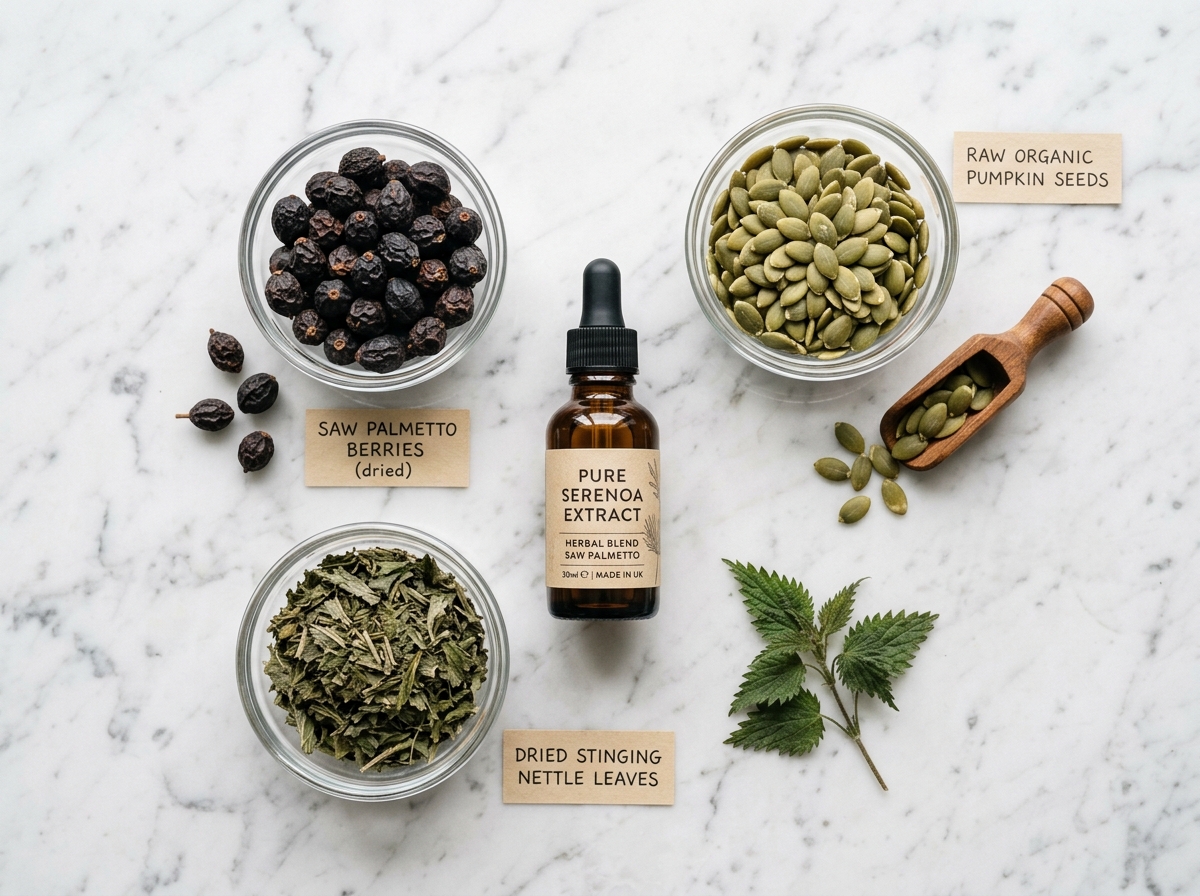
Botanical extracts for prostate health including Saw Palmetto berries, pumpkin seeds, and nettle leaf on marble
Laboratory-verified raw botanicals adhering to British pharmacopoeia purity standards.
🫐

Standardised Saw Palmetto (*Serenoa repens*)

Rich in bioavailable fatty acids (lauric, myristic) that naturally downregulate the 5-alpha-reductase enzyme, calming tissue proliferation without undesirable hormonal side effects.

🎃

Raw Organic Pumpkin Seed Oil (*Cucurbita pepo*)

High concentration of natural phytosterols and highly bioavailable zinc. Promotes healthy bladder neck relaxation and smooth, continuous voiding.

🌿

Stinging Nettle Root (*Urtica dioica*)

Contains unique lignans that bind sex-hormone-binding globulin (SHBG), helping maintain balanced free androgen levels in prostatic micro-tissue.

🔬

Bioactive Zinc & Natural Lycopene

The healthy human prostate accumulates more zinc than any other organ. Together with tomato lycopene carotenoids, it provides powerful antioxidant cellular shielding.

Calculate Your Daily Fluid & Pelvic Target

Many men restrict water to avoid night visits, but concentrated urine severely irritates the bladder wall, worsening urgency. Enter your details to get your calibrated intake targets:

✓ Calibrated water intake to prevent bladder irritation
✓ Dietary zinc & fiber targets for optimal pelvic metabolism
✓ 100% private, instant calculation in your browser
Dr. Alistair Vance, Consultant Urologist in London clinic consultation room

Dr. Alistair Vance, MBChB, FRCS (Urol)

Consultant Urological Specialist & Male Pelvic Health Contributor

🎓 GMC Registered 🏥 22+ Years Clinical Practice 🔬 Fellow of the Royal College of Surgeons

"In both NHS hospital practice and private consultations across London, I see hundreds of men every year whose sleep and daily confidence are disrupted by benign prostate enlargement and pelvic floor irritation. Providing men with reliable, scientifically grounded advice on lifestyle, fluid pacing, and standardised botanicals is one of the most effective first-line steps to restoring quality of life."

Learn About Our Editorial Board Take the 2-Minute Assessment

Regain the Freedom of Active, Confident Days

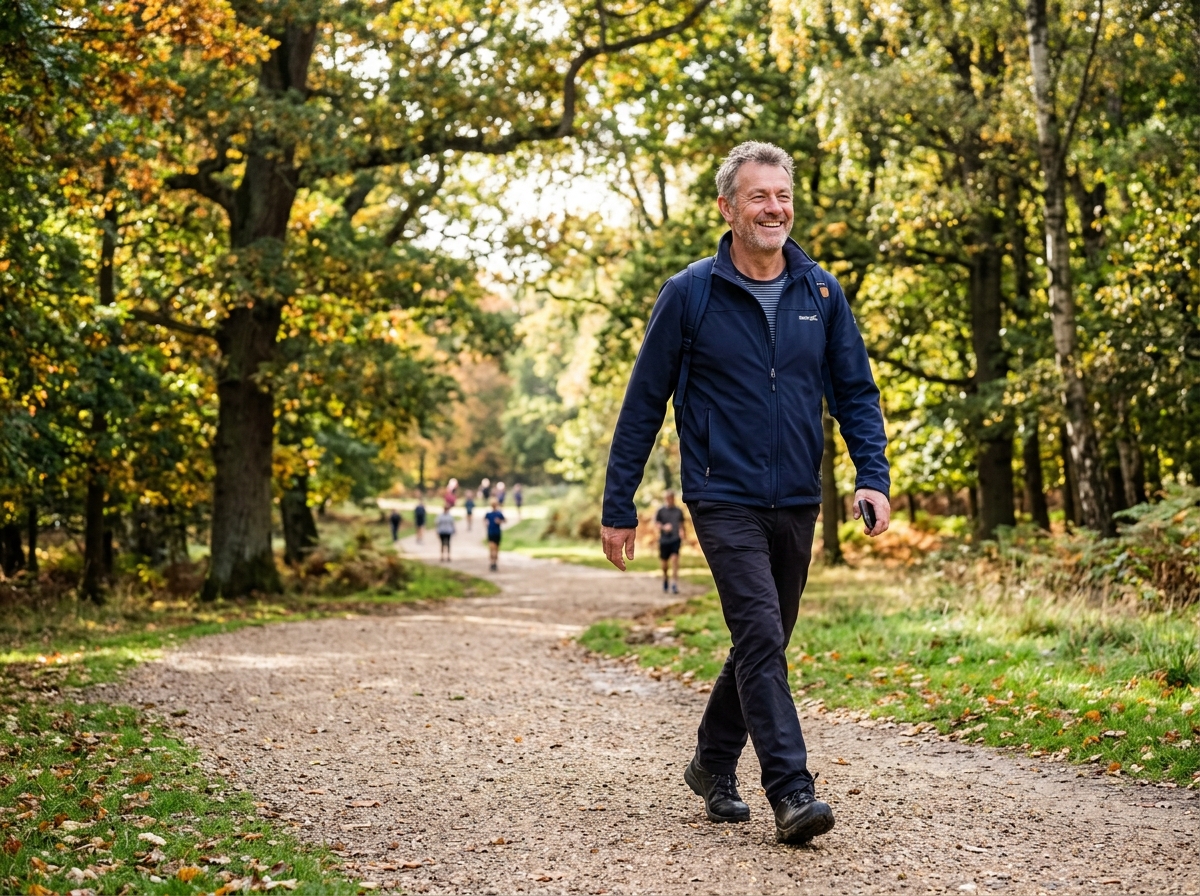
Living with the constant preoccupation of locating the nearest restroom during meetings, long drives, or walks through the countryside is exhausting. By combining daily physical walking with targeted nutrition, British men are successfully reclaiming active lives without hesitation.

  • ✓ 30 minutes of daily brisk walking stimulates pelvic venous circulation
  • ✓ Restricting alcohol and late caffeine prevents acute bladder spasm
  • ✓ Consistent phytotherapy supports long-term glandular tone
Explore the 30-Day Step-by-Step Guide ➔
Mature man walking energetically in a London park, smiling and vibrant

Common Myths Concerning Male Prostate Health

Misconceptions often delay men from taking proactive, gentle steps. Let us examine what modern clinical evidence demonstrates:

✕ Myth
"Stopping fluid intake after midday will cure frequent nighttime visits."
Clinical Fact:

Drastically restricting water concentrates urine, elevating acid and mineral concentrations that inflame the sensitive trigone of the bladder, making spasms and urgency even worse. Paced hydration is far superior.

✕ Myth
"Prostate enlargement and weak stream can only be resolved by invasive surgery."
Clinical Fact:

NHS and international urological guidelines recommend conservative watchful waiting, lifestyle adjustment, and evidence-backed phytotherapy (Saw Palmetto & Beta-Sitosterol) as effective first-line care for mild-to-moderate symptoms.

✕ Myth
"All herbal supplements and saw palmetto products deliver identical benefits."
Clinical Fact:

Crude dried leaf powders contain negligible active fatty acids. Proven clinical trials specifically utilize lipidosterolic extracts standardised to 85–95% free fatty acids and sterols.

Clear Answers to Common Questions

Everything you need to know regarding our self-assessment, botanical recommendations, and safe urological self-care:

Who should complete the ProstaWella UK Self-Assessment?

The assessment is designed for any man aged 40 or above who has noticed changes in urinary stream strength, frequency during the day, nocturia (waking at night), or feelings of incomplete bladder emptying. It offers a structured way to gauge symptom severity based on the validated International Prostate Symptom Score (IPSS) framework.

Does this website replace an examination by an NHS General Practitioner (GP)?

No. ProstaWella UK is an independent educational and lifestyle information service. While our content is reviewed by qualified medical professionals, it does not replace a physical clinical consultation, digital rectal examination (DRE), or PSA blood test conducted by your registered GP or an NHS urologist.

How long does it typically take to observe improvements with botanical protocols?

Unlike synthetic medications that may provide immediate but temporary smooth muscle relaxation, botanical extracts work progressively by nourishing tissue, calming local enzymes, and modulating cellular pathways. In clinical studies, noticeable improvements in nocturia and urinary flow are typically documented after 4 to 8 weeks of consistent daily usage.

Are there any contraindications or interactions with prescription medications?

Standardised extracts such as Saw Palmetto and Pumpkin Seed have an exceptional safety record. However, if you are currently taking prescribed anticoagulants (such as Warfarin), finasteride, or alpha-blockers (such as Tamsulosin), you should always consult your prescribing physician before introducing new botanical supplements.

What are the 'red flag' symptoms that require immediate medical attention?

If you experience visible blood in your urine (haematuria), sudden inability to pass urine at all (acute urinary retention), fever and chills accompanied by severe lower back pain, or unexplained sudden weight loss, you must seek urgent medical evaluation via NHS 111 or your local emergency department.